Is a Gated Community Worth It? Living at Blossom Trail
By Jordan Jay · · 6 min read
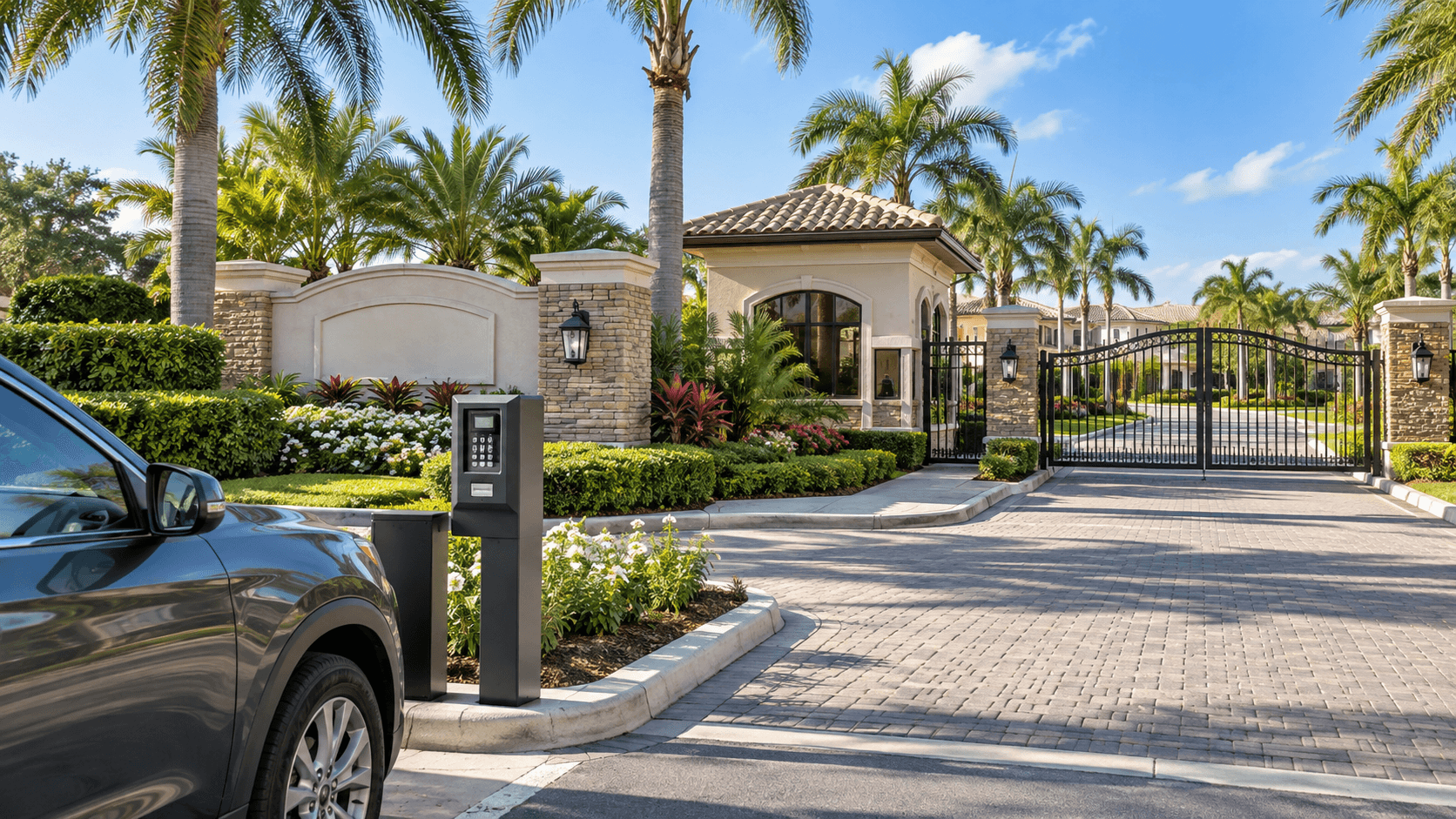
A gated community is a residential neighborhood with a controlled entry point—a gate, sometimes staffed, sometimes code- or transponder-operated—that limits vehicle access to residents, their guests, and anyone else specifically let in. It's a real, physical layer of access control, not just a marketing term, and Blossom Trail in Greenacres is one example of what that looks like in practice for a buyer actually shopping new construction today.
What a gate actually does
The core function of a gated entry is limiting who can drive into the community without a reason to be there. That cuts down on random through-traffic and door-to-door solicitors, and it means every vehicle entering has either a resident's access or a specific reason to be let in by that resident or the property management. It's a genuine deterrent for casual property crime, since a gated entry adds a real step that opportunistic activity elsewhere doesn't have to deal with.
What a gate doesn't do is guarantee safety in any absolute sense, and it's worth being realistic about that rather than oversold on it—a gate controls vehicle access, not every possible way onto a property, and it's one layer among several a homeowner might reasonably use, not a replacement for basic home security like locks, cameras, or an alarm system installed inside the home itself.
What amenities typically come with a gated community?
Gated communities often bundle shared amenities behind that same controlled entry—a pool, a clubhouse, sometimes a fitness center, or a playground—maintained through the HOA rather than by individual homeowners. Blossom Trail's own materials list a planned pool, a clubhouse with a fitness center, and a tot lot as amenities for the community, alongside the gated entry itself.

Because those amenities are maintained collectively through HOA dues rather than by each homeowner separately, a gated community with shared amenities can mean less individual upkeep than, say, owning and maintaining a private pool on your own lot—worth factoring into the value conversation beyond just the gate itself, especially for buyers weighing the true cost of ownership rather than just the sticker price.
The HOA trade-off
Gated communities virtually always come with an HOA, since someone has to fund and maintain the gate, the common areas, and any shared amenities. That means monthly or annual dues, and it means some level of community-wide rules around things like exterior appearance, which keeps the neighborhood looking consistent but does mean giving up a bit of individual control compared to a non-HOA neighborhood where each homeowner decides everything independently.
Blossom Trail has a confirmed HOA. Specific dues and what they cover in detail are the kind of thing best discussed directly at the contract stage, since that's where the real specifics live rather than in a general overview like this one.
Comparing gated to non-gated in the same market
In Greenacres and the surrounding part of Palm Beach County, both gated and non-gated new construction communities exist, often within a few miles of each other. The price difference between comparable homes in each type of community is usually smaller than buyers expect—the HOA dues that fund the gate and amenities are typically a modest monthly cost relative to the mortgage payment itself, not a dramatic add-on that changes the affordability picture. Where the real difference shows up is in the ongoing dues line item on a monthly budget, which is worth factoring in alongside the mortgage rather than treating as a separate, smaller consideration.
It's also worth asking, community by community, exactly what "gated" means in practice—a staffed gate with a guard checking every vehicle is a different level of access control than an unstaffed gate operated by a resident's transponder or a keypad code that guests can be given. Both are legitimately "gated," but they provide meaningfully different levels of control, and it's worth confirming which kind of gate a specific community actually has before assuming.
Is it actually worth it?
For a lot of buyers, yes—the combination of controlled access, shared amenities maintained by someone else, and a consistent-looking neighborhood is worth the HOA dues that come with it. For buyers who specifically want to avoid any HOA, or who don't value the amenities enough to offset the added cost, a gated community with dues attached may not be the right fit, and that's a completely reasonable conclusion too—there's no universally correct answer here, only what fits a given household's priorities and budget.

The honest way to think about it: a gate and shared amenities are a genuine value if you'll actually use the pool and clubhouse and if the reduced through-traffic and added access control matter to you personally. If neither of those things move the needle for your household, the added monthly cost of an HOA may not pencil out compared to a similar home in a non-gated neighborhood.
What living at Blossom Trail is actually like
Blossom Trail sits in Greenacres, a centrally located part of Palm Beach County within reach of Wellington, Lake Worth Beach, and West Palm Beach. Inside the gates, residents have access to the community's five floor plans across townhomes and single-family homes, plus the planned pool, clubhouse, and lot. Outside the gates, Haverhill Road and Jog Road put the rest of the county's shopping, dining, and services within a straightforward drive, so residents aren't cut off from everything beyond the entry—the gate controls who drives in, not how easily residents get out to the rest of their daily life.
Common Questions
What does a gated community actually prevent?
It limits vehicle access to residents and their guests, cutting down on random through-traffic and door-to-door solicitors. It's a deterrent, not a guarantee of safety.
Do gated communities always have an HOA?
Virtually always -- someone has to fund and maintain the gate and any shared amenities, and that's typically done through HOA dues.
What amenities does Blossom Trail have?
D.R. Horton's own materials list a planned pool, a clubhouse with a fitness center, and a tot lot, in addition to the gated entry.
Is a gated community more expensive than a non-gated one?
Typically yes, due to the HOA dues that fund the gate and shared amenities -- whether that's worth it depends on how much you'll use those amenities.
Does living in a gated community mean I don't need my own home security?
No -- a gate controls vehicle access, not every possible way onto a property. It's one layer of security among several, not a replacement for locks, cameras or an alarm.
Is Blossom Trail's pool and clubhouse open now?
Blossom Trail is a newer community and its shared amenities were still being finished as of our last check. Call 561-704-0091 for the current status.
Want to see the gated entry and planned amenities in person? Schedule a visit to Blossom Trail or call 561-704-0091.
For the buying process, see our new construction inspection guide. For everyday life nearby, read schools, shopping and getting around. See what's included on every plan in what's included plus the D.R. Horton warranty, and for the full buyer's guide to this market, start with houses for sale in Greenacres, FL.