Quartz vs. Granite Countertops: What's Actually Different
By Jordan Jay · · 6 min read
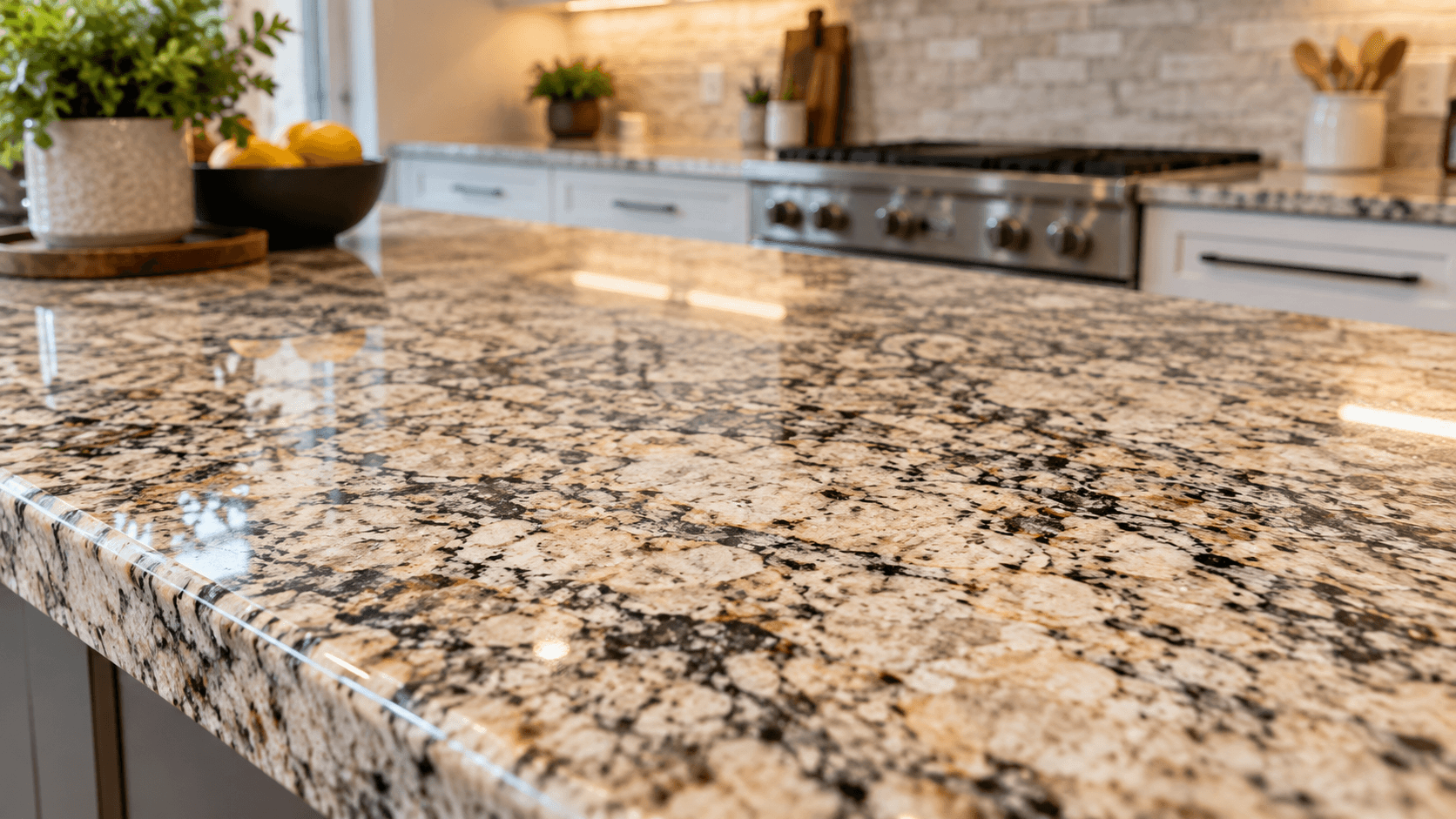
Granite and quartz get compared constantly in new construction, and the short version is: they're both durable, both look premium, and the real differences are more about maintenance and consistency than which one is objectively "better." At Blossom Trail, every home actually includes both -- 2CM granite in the kitchen and 2CM quartz in the bathrooms -- which makes it a useful place to explain the real difference rather than just repeat marketing language you'd find on any builder's spec sheet.
What granite actually is
Granite is a natural stone, cut from quarried slabs. Every piece is genuinely unique—the veining and color pattern in one slab won't match another exactly, which is part of the appeal for buyers who want a countertop that looks like nothing else in the neighborhood. It's extremely hard and heat-resistant, which is why it's been the standard kitchen countertop material in new construction for decades running.
Because it's natural stone, granite is porous at a microscopic level, which means it should be sealed periodically—most granite comes pre-sealed from the fabricator, but it's worth resealing every year or two depending on use to keep it resistant to staining from things like wine, oil, or acidic foods left sitting on the surface for any length of time.

What quartz actually is
Quartz countertops are engineered, not quarried—they're made from crushed quartz crystal bound together with resin, then formed into slabs. That manufacturing process is why quartz countertops look far more uniform than granite: the pattern is consistent across the whole slab, and you can typically order a matching piece later if you ever need one, which isn't really possible with natural stone.
Because the resin binder seals the surface during manufacturing, quartz doesn't need periodic sealing the way granite does—it's non-porous straight out of the box, which makes it more forgiving of spills that sit for a while before getting wiped up. It's also very hard, though it can be somewhat more sensitive to extreme heat than granite, since the resin binder can be affected by a hot pan set directly on the surface.
Why Blossom Trail uses granite in the kitchen and quartz in the baths
This split is specific to this community's features sheet—some other D.R. Horton communities do it the other way around or use one material throughout, so it's genuinely worth confirming for any specific community rather than assuming your last new-construction tour set the pattern. At Blossom Trail, the kitchen gets 2CM granite, which handles the heavier daily use a kitchen sees—hot pans, knives, general wear—especially well. The bathrooms get 2CM quartz, which resists the moisture and product residue (lotions, toothpaste, makeup) that bathroom counters deal with, without needing the periodic resealing granite requires in a room that sees near-constant water exposure.

Does the material actually matter for day-to-day living?
For most buyers, honestly, less than the marketing suggests. Both materials are hard, durable, and will look good for decades with reasonable care. The practical differences that actually show up in daily life: granite needs occasional resealing and is slightly more prone to staining if something acidic sits on it too long; quartz doesn't need sealing but can be marginally more sensitive to a very hot pan set directly on the surface without a trivet underneath. Neither difference is dramatic enough to make or break a decision on its own—most buyers end up choosing based on look and feel rather than the maintenance gap.
Both are considered premium countertop materials—neither is a "downgrade" from the other, despite how some builders market one as an upgrade over the other in different communities. At Blossom Trail, both are included as standard in the rooms where each one's particular strengths matter most, without either one being treated as the lesser option.
Everyday care for each material
Keeping granite looking good day to day is mostly about wiping up spills promptly, especially anything acidic like citrus, wine, or vinegar-based dressings, and using a cutting board rather than cutting directly on the surface—not because the knife will damage the stone, but to protect your knife edges. A mild soap and water is enough for regular cleaning; harsh acidic cleaners can gradually wear down the sealant over time.
Quartz is even lower-maintenance in daily use—soap and water handle most cleaning, and there's no sealant to maintain. The main thing to watch for is heat: always use a trivet or hot pad under pots and pans straight off the stove, since direct heat contact can occasionally cause discoloration or minor damage to the resin binder over time, something granite handles without issue.
Does the material affect resale down the line?
Both materials are widely recognized by buyers and appraisers as premium finishes, so neither one puts a home at a disadvantage compared to the other when it eventually goes back on the market. What matters more for resale, generally, is that the countertops are well maintained and free of visible damage or staining—a well-cared-for granite counter and a well-cared-for quartz counter read the same way to most buyers touring a home.
Asking the right question on a tour
When touring any new construction home, it's worth asking specifically which rooms get which material and why, rather than assuming a uniform standard across every community from the same builder—as this guide shows, that assumption doesn't always hold even within one builder's own lineup. A sales team should be able to answer clearly and point to the specific features sheet for that community.
What "2CM" means
The "2CM" in front of both materials refers to the slab thickness—2 centimeters, or a little under an inch. It's a standard thickness for countertops in new construction, thinner than some higher-end custom installations that use 3CM slabs, but plenty durable for normal residential use with proper support underneath (typically plywood backing, which is standard practice and not something to worry about).
Common Questions
Is granite or quartz better for a kitchen?
Both are excellent choices. Granite handles heat and heavy daily use very well; quartz doesn't require sealing. Neither is objectively better -- it depends on maintenance preference.
Does granite need to be sealed?
Yes, periodically -- most granite comes pre-sealed, but resealing every year or two is recommended to maintain stain resistance.
Does quartz need to be sealed?
No -- quartz is non-porous as manufactured and doesn't require sealing.
Why does Blossom Trail use different materials in the kitchen and bathrooms?
Granite in the kitchen handles heat and daily wear well; quartz in the bathrooms resists moisture and doesn't need resealing in a room with constant water exposure. It's a deliberate pairing for each room's use.
What does "2CM" mean on a countertop spec sheet?
It refers to the slab thickness -- 2 centimeters, a standard thickness for new construction countertops.
Is quartz more expensive than granite?
Pricing varies by supplier and specific slab, but both are considered comparable, premium-tier materials in new construction -- neither is treated as a budget option.
Want to see both materials in person? Schedule a visit to Blossom Trail or call 561-704-0091.
For the rest of what's included at Blossom Trail, see what's included plus the D.R. Horton warranty. Comparing home types? Read townhouse vs. single-family home, or see the countertops in context on a specific plan by comparing Bella vs. Terra. If a gated community is part of your decision, read is a gated community worth it?